
Four Signals It May Be Time to Upgrade Your Food Drying Equipment
In many food manufacturing facilities, industrial drying equipment has run the same way for years — sometimes decades. Operators understand the quirks. Maintenance teams know where buildup occurs. Supervisors know how to “dial it in” when feedstock shifts.
Because the system runs, variability, energy intensity, and downtime can start to feel inevitable. But in many cases, these challenges aren’t inherent to drying itself — they’re tied to legacy food-processing dryer design.
If you’re evaluating whether to replace your traditional drying equipment or modernize your production line, here are four operational signals worth paying attention to.
#1 Cleaning Frequency Is Increasing
Some product buildup is expected, particularly when processing high-sugar, high-fat, or sticky materials. But when sanitation cycles become more frequent — or unplanned cleaning interrupts production — it may indicate performance limitations in your current drying system.
Extended residence times and uneven airflow in older industrial drying equipment can allow material to adhere to internal surfaces. As throughput increases or product formulations evolve, buildup can accelerate.
Operational impact:
Increased downtime
Higher sanitation labor costs
Reduced overall equipment effectiveness (OEE)
Increased maintenance demands
Modern drying systems designed for rapid moisture removal and reduced surface exposure can improve run stability and reduce buildup.
If cleaning intervals are shortening over time, it may be time to evaluate whether your food drying equipment is still aligned with your production demands.
#2 Operators Are Constantly Adjusting to Maintain Moisture Target
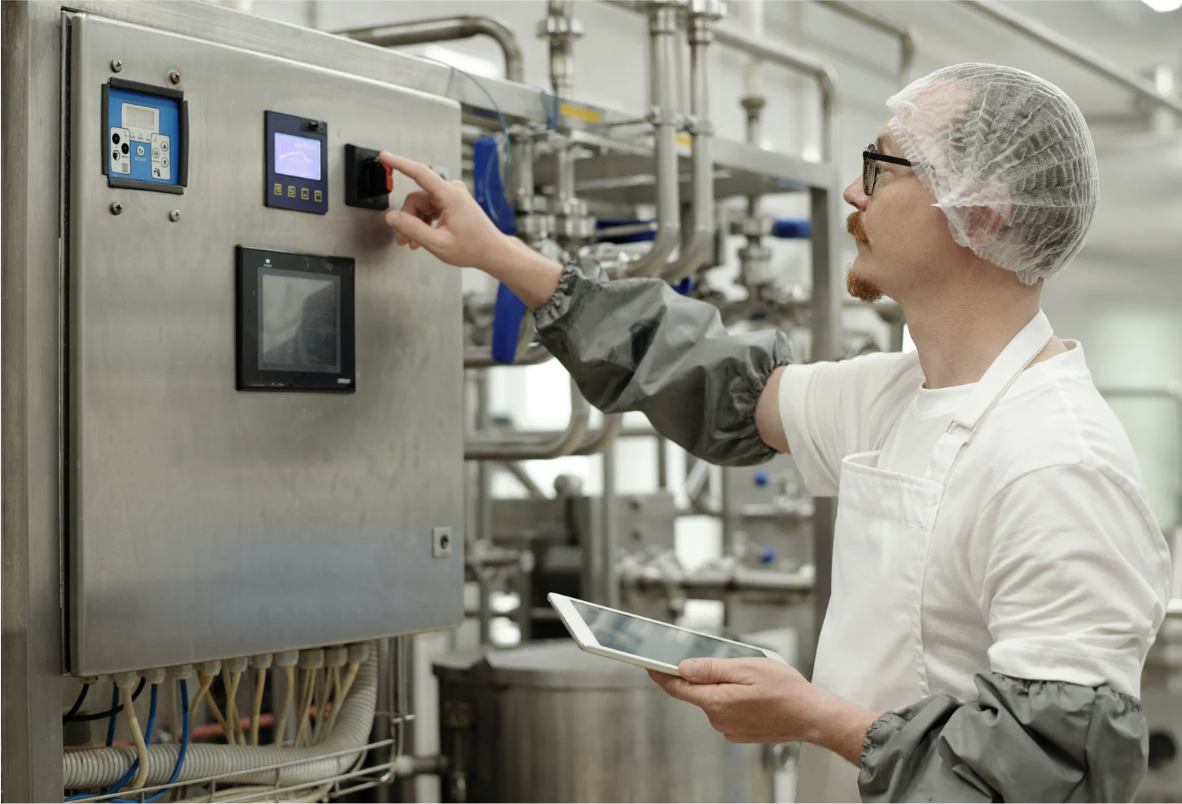
Maintaining consistent final moisture is critical for product quality, shelf life, and downstream performance. If your team is frequently adjusting temperature, feed rate, or airflow to stay within spec, your drying system performance window may be too wide.
Common indicators include:
Off-spec batches during feedstock variation
Frequent manual intervention
Inconsistent particle size or flowability
Legacy food processing dryers often rely on extended heat exposure to achieve moisture removal. Small changes in feed composition can result in large swings in output quality. Our RENU™ Drying & Milling System is energy-efficient, fully automated, and operates within tighter, more predictable process windows, reducing the need for constant adjustment.
If operator expertise is compensating for equipment variability, upgrading your drying system may improve consistency, lower labor costs, and reduce production risk.
#3 Drying Has Become the Throughput Bottleneck
As production goals increase, older drying equipment can become the limiting factor in your line.
You may notice:
Upstream equipment waiting on the dryer
Quality degradation at higher feed rates
Energy usage rising disproportionately with output
Long dwell-time systems often struggle to scale efficiently. Increasing throughput may require higher temperatures or longer runtimes, driving up operational costs.
RENU, on the other hand, is scalable and designed for high-intensity drying, so it can maintain performance at increased feed rates without proportionally increasing thermal stress or footprint. If drying is constraining plant capacity, it may be time to consider replacing legacy drying equipment with a more scalable solution.
#4 Energy Cost Per Pound Is Rising
Energy consumption is one of the largest cost drivers in industrial drying equipment.
Older systems frequently rely on:
Large thermal mass
Indirect heat transfer
Extended residence times
As utility rates fluctuate, energy cost per pound of finished product can increase — especially if overdrying is used as a safeguard against variability.
Modern electric drying systems with shorter residence times can reduce energy use in food processing operations. Because RENU is 100% electric and has a residence time of less than a second, it can dramatically improve energy efficiency and mitigate reliance on natural gas and steam.
If your energy intensity continues to climb despite stable production volumes, evaluating more energy-efficient drying equipment could improve both margins and long-term sustainability goals.
Evaluating an Upgrade Without Disrupting Production
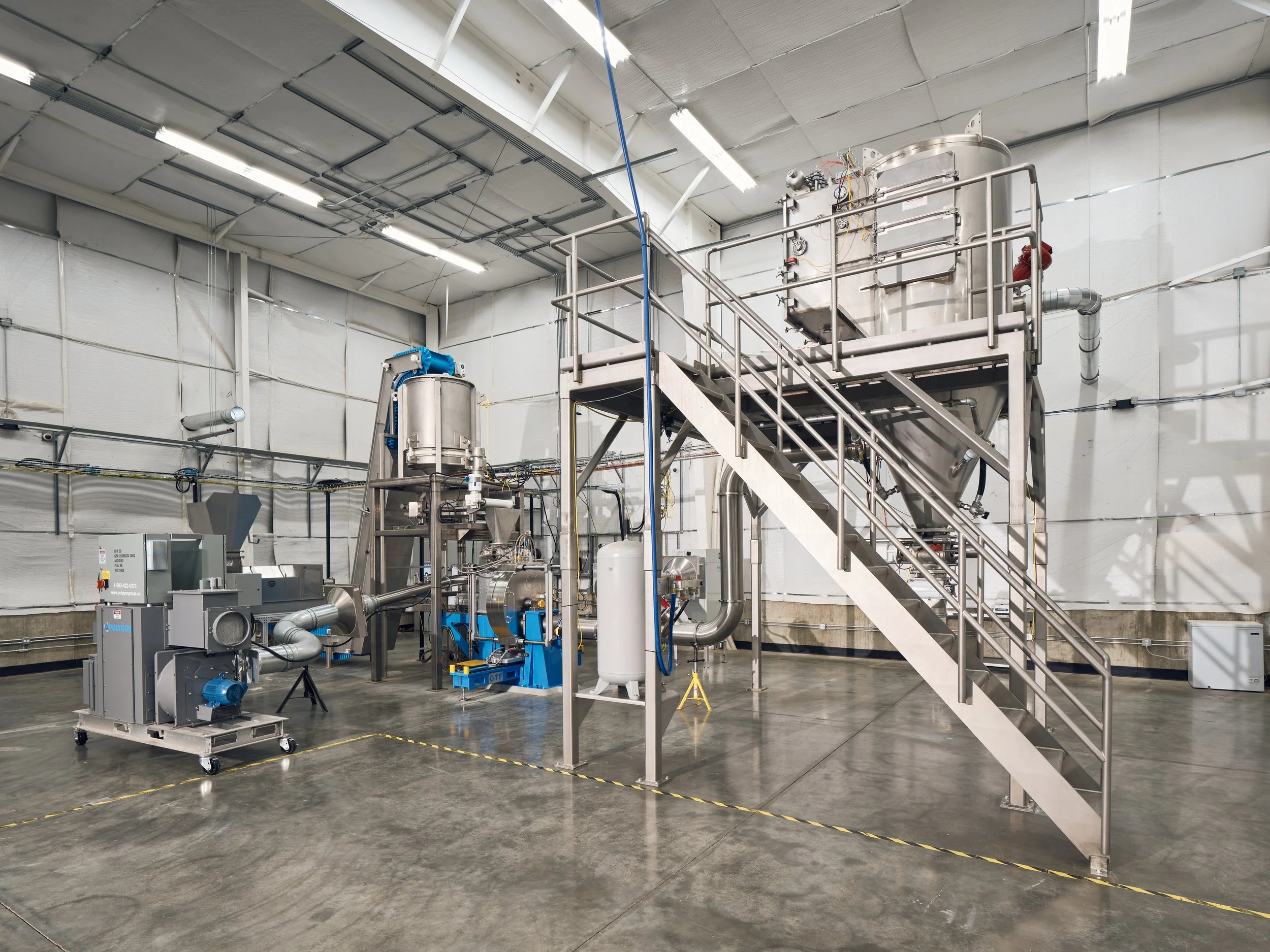
Often, replacing industrial drying equipment raises immediate concerns about downtime and capital investment. However, modernization does not require immediate plant-wide disruption. And at under 400 square feet, RENU’s compact design enables it to fit into most facilities without major reconstruction.
A structured material evaluation and sample process can help determine:
Compatibility with RENU
Expected performance at commercial scale
Energy efficiency improvements
Integration requirements within existing infrastructure
This approach allows you to evaluate RENU while maintaining ongoing production.
Stable Drying Supports Predictable Operations
Drying impacts nearly every key performance metric in food manufacturing — quality, yield, labor efficiency, energy use, and throughput.
When variability, buildup, and bottlenecks are accepted as unavoidable, incremental inefficiencies accumulate over time. But in many cases, these issues reflect the limitations of legacy drying equipment — not drying as a process. The RENU Drying & Milling System by GTF Technologies is engineered for tighter control, shorter residence times, improved energy efficiency, and scalable throughput.
If your food processing dryer is creating operational strain, it may be worth evaluating whether your current system is truly optimized for today’s production demands. Contact GTF for a demo or product evaluation.