
Industrial Drying Systems: Why Residence Time, Shear, and Particle Control Matter
When evaluating food drying systems, temperature alone rarely tells the full story.
Two systems operating at similar temperatures can produce very different ingredient quality outcomes depending on residence time, heat transfer efficiency, airflow dynamics, and particle control throughout the process.
That’s because drying is not simply about removing moisture — it’s about controlling how ingredients are exposed to heat and stress during processing.
As food and beverage manufacturers pursue higher-value ingredients and scalable production opportunities, process intensity increasingly matters.
Why Residence Time Matters
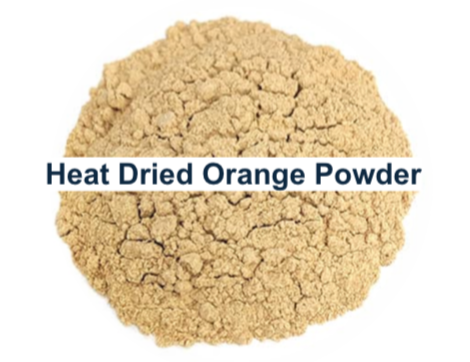
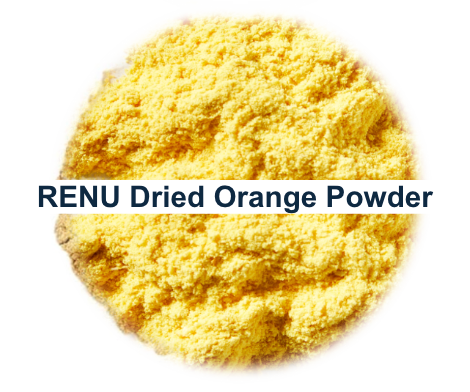
The longer ingredients remain exposed to heat and oxygen, the greater the opportunity for degradation.
Extended dwell times can contribute to:
flavor loss
color degradation
oxidation
nutrient destruction
structural particle damage
This is especially important for heat-sensitive materials like fruits, vegetables, proteins, and upcycled side streams.
Efficient food drying systems are designed to maximize heat and mass transfer so moisture can be removed more rapidly and uniformly, reducing unnecessary exposure while helping preserve ingredient quality.
The key is not simply lower temperatures — it is more efficient moisture removal.
Drying is also a Particle Engineering Process
Drying conditions directly affect how powders behave downstream.
As particles move through a drying system, they experience airflow, collision, agitation, and varying levels of mechanical shear. Excessive stress can alter particle morphology and affect:
flowability
rehydration behavior
bulk density
dispersibility
blending consistency
Drying conditions also influence milling performance. Poorly controlled drying can create inconsistent particle structures that are more difficult to mill uniformly and more susceptible to agglomeration or excessive fines.
For modern ingredient manufacturers, drying and particle control are closely interconnected.
Why Traditional Long-Dwell Systems Behave Differently
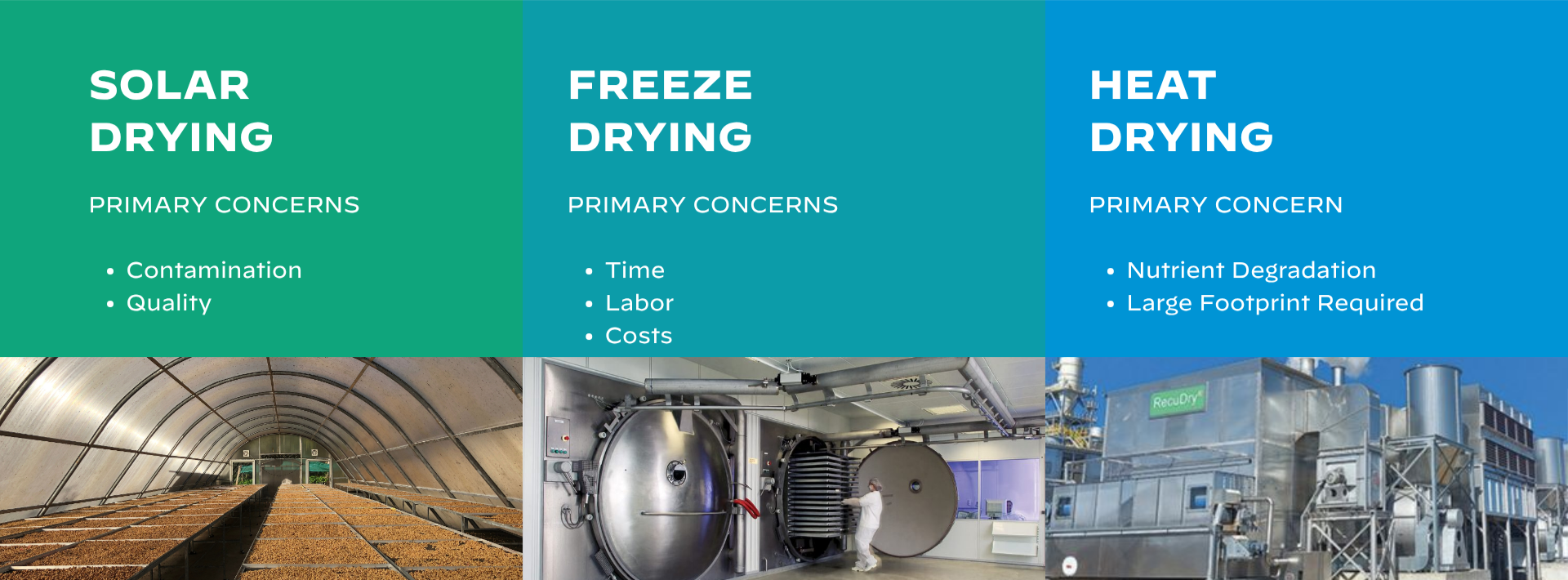
Many traditional drying systems were originally designed for bulk moisture removal and throughput rather than optimizing nutrient and ingredient quality.
While effective for commodity processing, long-dwell systems may expose ingredients to prolonged thermal and mechanical stress, impacting final powder quality and functionality.
This becomes increasingly important as manufacturers shift toward:
premium powders
functional ingredients
clean-label formulations
These materials are often more sensitive to processing conditions, making exposure management a critical part of ingredient quality.
Where Advanced Process Design Makes a Difference
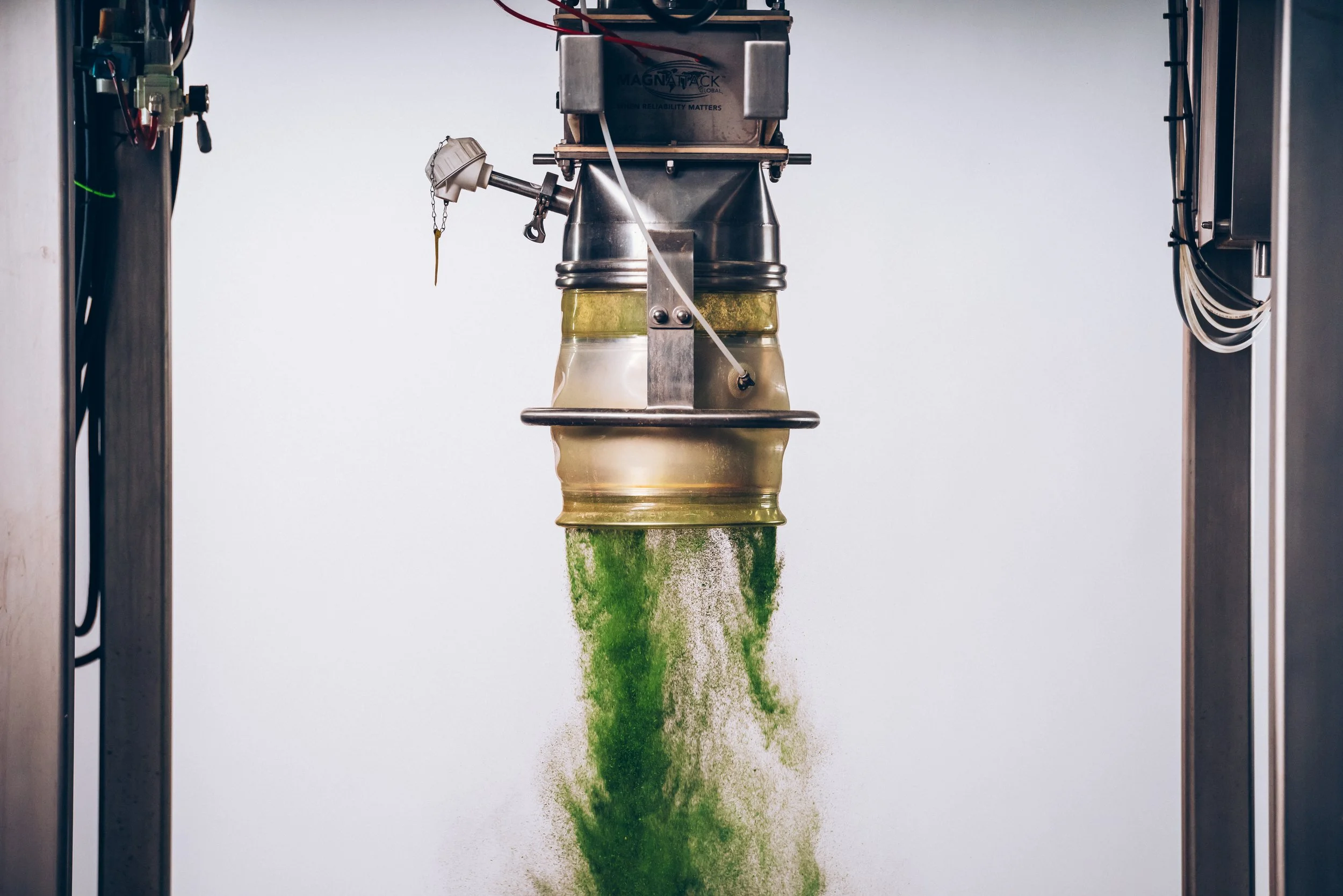
Modern ingredient processing increasingly requires systems designed around efficient heat and mass transfer, controlled particle handling, and shorter exposure windows.
The RENU™ Drying & Milling System was developed with these principles in mind.
By creating a high-efficiency drying environment with controlled particle processing conditions, the RENU System helps manufacturers reduce unnecessary thermal exposure while supporting more consistent powder characteristics and downstream performance.
This approach can help support:
improved ingredient consistency
tighter particle control
reduced thermal degradation
better milling behavior
preservation of functional ingredient properties
For processors working with fruits, vegetables, and upcycled side streams, these process differences can significantly influence both ingredient quality and process economics.
Because in advanced ingredient manufacturing, process conditions shape product quality.